2026-11-11 · Mike Kowalski
Handling Basement Flooding After Spring Snow Melt in Buffalo
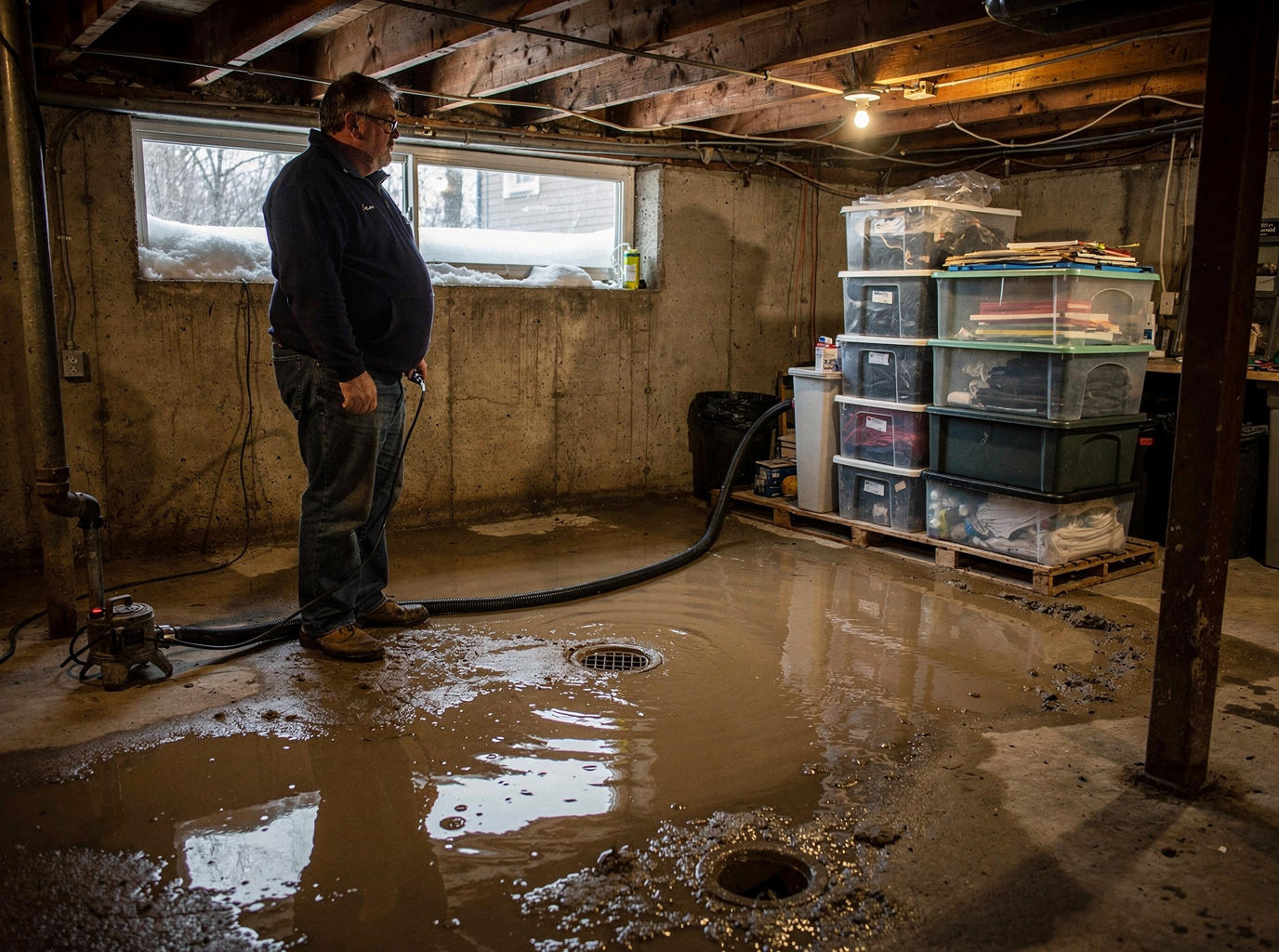
After spring snow melt in Buffalo, handle basement flooding by extracting standing water within the first 24 hours, then running commercial dehumidifiers for 4-7 days while monitoring moisture levels in older Erie County homes to avoid mold growth in foundations common to Allentown and South Buffalo.
Spring Snow Melt Patterns in Buffalo Neighborhoods
Buffalo's humid continental climate brings heavy lake-effect snow each winter that piles up in areas like University Heights and Lovejoy before melting fast in spring. This runoff saturates soil around older brick and stone foundations in Riverside and Broadway-Fillmore, pushing water through cracks that form over decades. Homes in North Buffalo and Kaisertown often see water enter at floor joints because the terrain slopes toward basements near Delaware Park. The melt volume increases when temperatures swing from freezing nights to 50-degree days, overwhelming sump pumps in South Buffalo properties built before modern drainage standards. Nearby Amherst and Cheektowaga face similar issues due to shared soil conditions and flat topography that holds water longer than hilly spots.
Assessing Water Intrusion in Older Erie County Homes
Inspect basements in Allentown and Elmwood Village first by checking for water lines on walls and soft spots in flooring, since many structures date back 80-100 years with limestone foundations that absorb moisture readily. Look for efflorescence on concrete in Black Rock homes where lake-effect snow melt seeps through mortar joints. Measure humidity above 60 percent with a meter to confirm hidden dampness near the Buffalo Niagara Medical Campus area, where older medical buildings influence nearby residential stock. Document any electrical risks before proceeding, as flooded panels in Lovejoy basements can create hazards during the thaw period. This evaluation reveals whether water came from surface runoff or backed-up sewers common after heavy melt in Kaisertown.
Water Extraction and Initial Drying Steps
Remove pooled water using submersible pumps rated for 2,000 gallons per hour, focusing on low spots in University Heights basements where melt collects against foundation walls. Follow with wet vacuums to pull moisture from carpets and padding in Riverside properties, discarding saturated materials that hold bacteria from street runoff. Position air movers at 45-degree angles along walls in Broadway-Fillmore homes to evaporate surface water within 48 hours. Run dehumidifiers set to 45-50 percent relative humidity for at least 5 days, checking readings twice daily in North Buffalo to ensure levels drop below 50 percent. Water Damage Restoration crews often handle this sequence when volumes exceed what portable equipment manages in South Buffalo.
Long-Term Prevention After Melt Events
Install French drains around foundations in Allentown homes to redirect future spring runoff away from basements, especially where soil stays saturated from Erie County winters. Seal exterior walls with waterproof membranes in Elmwood Village properties to block seepage through aging mortar. Extend downspouts 6-10 feet from the house in Black Rock to reduce water pooling near entry points. Review Preventing Frozen Pipe Bursts in Buffalo Winters for winter prep that limits spring melt volume. Consider Water Damage Repair for recurring issues in older homes detailed in Water Damage Considerations for Older Homes in Buffalo Neighborhoods. Contact Buffalo Water Damage Restoration pros at 190 Gruner Rd during Mon–Fri 8am–6pm or Sat 9am–2pm for site-specific assessments.