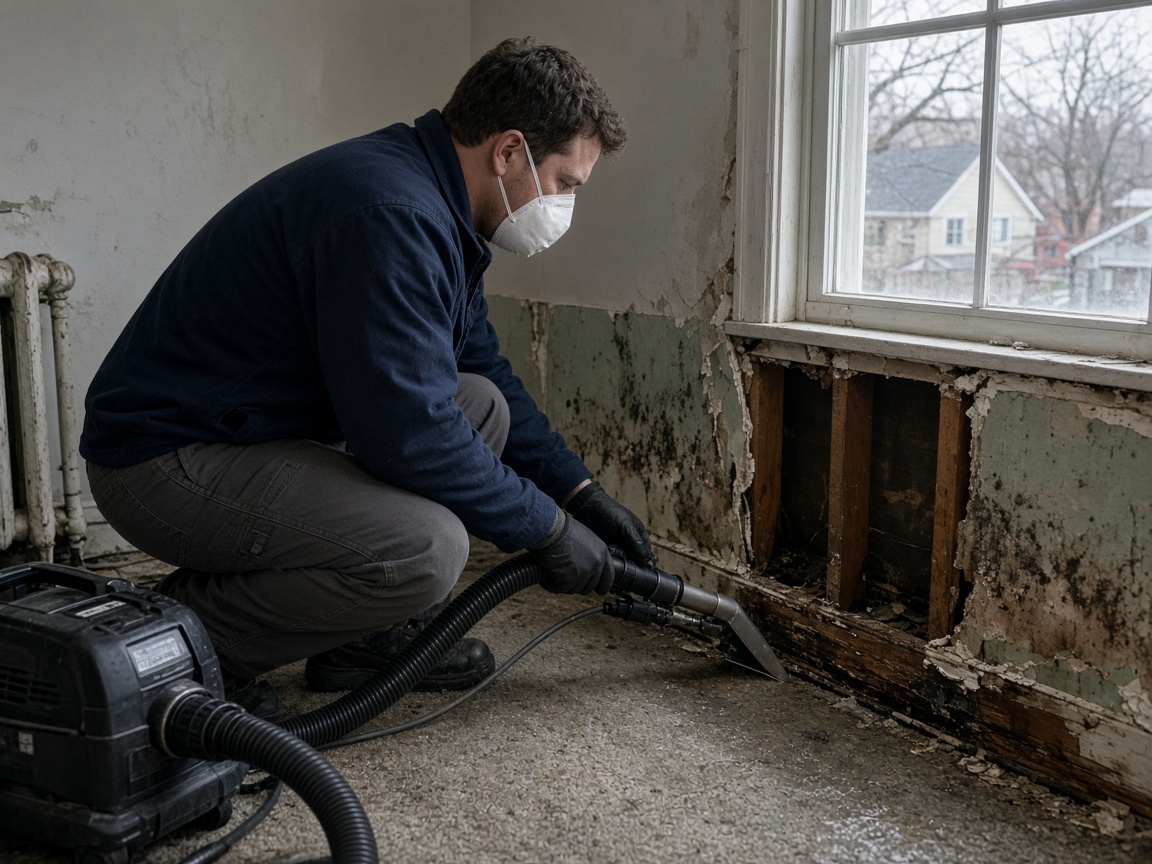
Buffalo's humid continental climate brings heavy lake-effect snow that piles on older roofs in neighborhoods like Allentown and Broadway-Fillmore, leading to ice dams and attic leaks that soak plaster and lath in pre-1950 homes. These structures often have balloon framing that lets water travel far from the entry point, so extraction must reach behind walls and under floors before mold sets in. Technicians at 190 Gruner Rd respond to calls from nearby Amherst and Cheektowaga where similar stock requires careful moisture mapping with meters to avoid missing hidden saturation in brick foundations common across Erie County.
North Buffalo and Riverside properties sit on flatter terrain near the Niagara River, so spring thaws and heavy rains push groundwater into basements with porous limestone walls. Water damage restoration here focuses on removing standing water quickly, then using air movers and dehumidifiers sized for the square footage to pull moisture from joists before it warps hardwood. Delaying drying in these damp conditions lets secondary damage reach electrical systems and insulation, turning a roof leak into full-room rebuilds.
South Buffalo and Kaisertown homes built on clay-heavy soil hold water longer after storms, forcing crews to address both surface extraction and subfloor drying. Edge cases include burst pipes in University Heights apartments where shared walls spread moisture to multiple units. Restoration avoids shortcuts like covering wet drywall because Buffalo winters freeze residual water and crack finishes months later.
Canalside and Delaware Park area commercial buildings face different risks from roof drains clogged by snow, requiring commercial-grade equipment to handle larger volumes without disrupting operations. Every job starts with documenting affected materials so homeowners in Lovejoy can see exactly what must be removed versus dried in place.
Technician insight
In Buffalo the thing that catches most people out with water damage restoration is how lake-effect snow creates hidden ice dams on the steep roofs of Allentown and Elmwood Village homes; water travels down balloon-framed walls and soaks plaster two floors below the leak, so you have to open cavities early or the job doubles in winter when everything freezes again.
Attic Leak in Broadway-Fillmore Row House
Heavy snow caused an ice dam on a 1920s row house. Water traveled through the attic and down interior walls into the second-floor bedroom. Extraction and targeted drying prevented mold spread into shared walls with the neighboring unit. Homeowner returned to a dry space without full ceiling replacement.
Water Damage Restoration Services We Offer
✓Basement Water Extraction
Removes standing water from flooded basements in South Buffalo and Black Rock using submersible pumps sized for clay soil retention.
✓Ice Dam Leak Repair
Addresses attic and ceiling damage from winter ice dams common in Allentown and Elmwood Village older roofs.
✓Structural Drying After Flooding
Deploys industrial air movers and dehumidifiers to dry joists and plaster in North Buffalo homes hit by river-adjacent groundwater.
✓Mold Prevention After Water Intrusion
Treats and contains moisture in University Heights and Lovejoy properties to stop mold growth before it spreads through balloon framing.
✓Emergency Water Damage Response
Provides 24-hour initial assessment for burst pipes or storm damage across Riverside and Kaisertown neighborhoods.
Water Damage Restoration Cost in Buffalo, NY
| Service | Typical Range | What Affects It |
|---|---|---|
| Emergency Extraction Visit | $250–$600 | Depends on water volume and access in older homes |
| Full Structural Drying | $800–$2,200 | Varies with square footage and number of affected rooms |
| Ice Dam Related Ceiling Repair | $1,200–$3,500 | Includes drying plus plaster or drywall replacement |
| Basement Waterproofing Consultation | Free | Inspection only; repairs quoted separately |
Ranges are typical for Buffalo, NY and confirmed with an exact written quote before any work starts.
How it works
- 1
Initial Assessment
Technician inspects the property, maps moisture with meters, and identifies affected materials in the specific Buffalo neighborhood.
- 2
Water Extraction
Removes standing water using pumps and vacuums suited to the volume and location found during assessment.
- 3
Drying and Dehumidification
Sets up equipment to pull remaining moisture from walls, floors, and cavities while monitoring daily readings.
- 4
Restoration and Repairs
Replaces damaged drywall, flooring, or insulation and returns the space to pre-loss condition.
Pricing
Upfront quotes after inspection; costs vary by extent of saturation and materials affected.