Buffalo's humid continental climate brings heavy lake-effect snow that often leads to ice dams on older roofs in neighborhoods like Black Rock and Lovejoy. These dams force water under shingles and into attics of pre-war housing stock common throughout Erie County. Crews responding from 190 Gruner Rd must cut through multiple layers of insulation and plaster to reach trapped moisture before mold sets in during the freeze-thaw cycles typical from December through March.
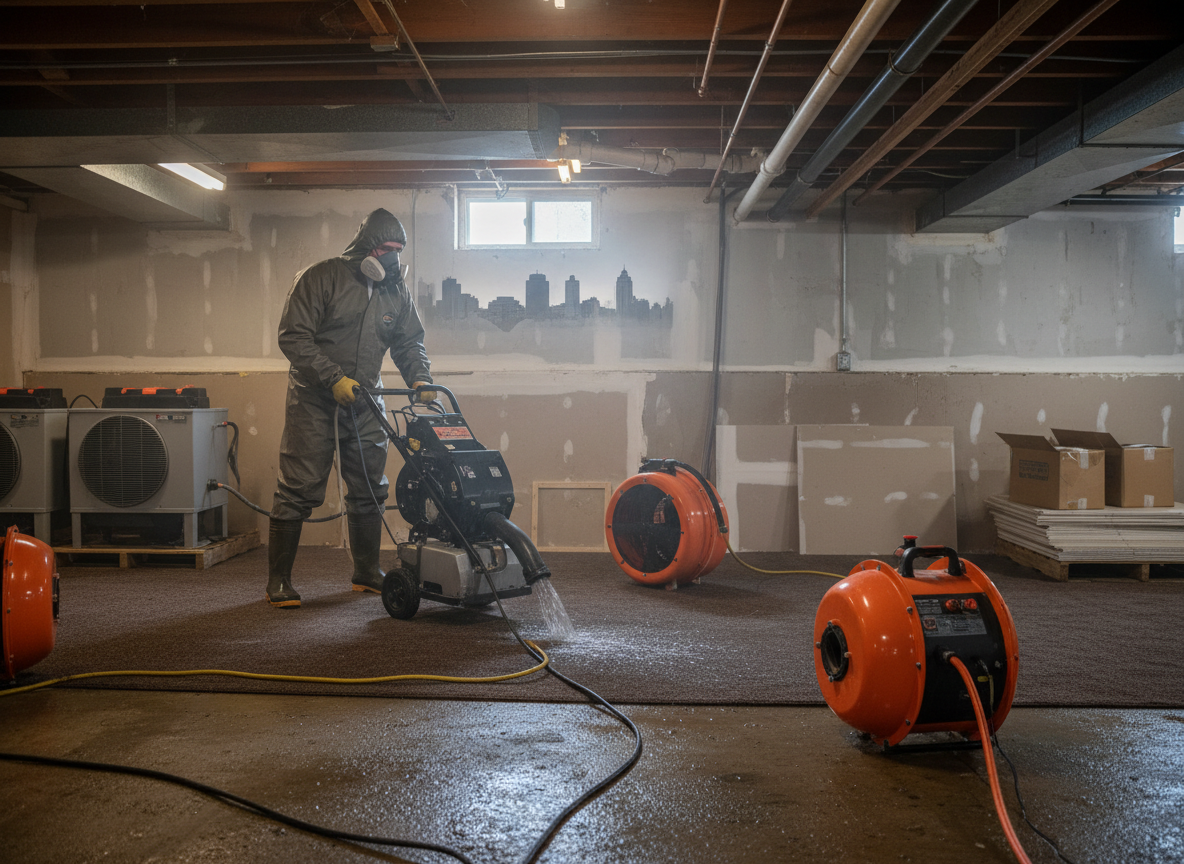
Basements in South Buffalo and University Heights sit on clay-heavy soil that holds water after heavy spring rains or rapid snow melt. Sump pumps fail frequently in these older homes because original clay tile drains are clogged or collapsed. Restoration teams extract standing water, then use air movers and dehumidifiers sized for the tight, low-ceiling spaces found in 1920s and 1930s properties rather than the open layouts of newer Amherst subdivisions.
Water from Canalside-area flooding or backed-up sewers in Riverside carries silt and contaminants that require full removal of affected subflooring. Technicians document moisture readings at multiple depths in hardwood and plaster to satisfy Erie County inspection requirements before any reconstruction begins. Work in Broadway-Fillmore row houses often involves coordinating with adjacent units because shared walls allow water to travel laterally.
Technician insight
In Buffalo, the thing that catches most people out with Emergency Water Damage Restoration is how fast lake-effect snow turns into hidden attic moisture in 1920s homes in Kaisertown and Black Rock; the ice melts during the day then refreezes at night, pushing water farther behind plaster than homeowners expect.
Ice Dam Leak in North Buffalo Attic
A 1930s home in North Buffalo developed ceiling stains after a heavy snow week. Inspection found water trapped between layers of insulation and the plaster ceiling. Crews removed saturated material, ran drying equipment for six days through a cold snap, and documented readings for the homeowner's insurance file.
Emergency Water Damage Restoration Services We Offer
✓Burst Pipe Water Extraction
Rapid removal of water from supply line failures common in older North Buffalo plumbing, followed by targeted drying to prevent damage to plaster and hardwood floors.
✓Ice Dam Leak Repair
Extraction and drying after roof leaks caused by lake-effect snow buildup, focusing on attics and upper floors in Kaisertown and Allentown homes.
✓Basement Flood Cleanup
Pumping and drying of groundwater or snow-melt intrusion in South Buffalo and Lovejoy basements where clay soil slows natural drainage.
✓Sewage Backup Remediation
Safe removal and sanitization of contaminated water from municipal line backups that affect Riverside and University Heights properties during heavy rain.
✓Storm Water Damage Drying
Dehumidification and moisture mapping after heavy rains or wind-driven water entry around windows in Elmwood Village and Broadway-Fillmore structures.
Emergency Water Damage Restoration Cost in Buffalo, NY
| Service | Typical Range | What Affects It |
|---|---|---|
| Initial assessment and moisture mapping | Free | Includes travel to Allentown, South Buffalo or other Erie County neighborhoods |
| Water extraction | $600–$1,800 | Varies with depth of water and access in older basements |
| Equipment drying package | $400–$1,200 | Daily rate for air movers and dehumidifiers; longer in winter humidity |
| Sewage contamination handling | $800–$2,200 | Includes disposal and sanitization for Riverside backups |
Ranges are typical for Buffalo, NY and confirmed with an exact written quote before any work starts.
How it works
- 1
On-Site Assessment
Technician arrives within hours, locates the water source, and maps moisture in walls, floors, and ceilings using meters calibrated for Buffalo's older building materials.
- 2
Water Removal
High-capacity pumps and vacuums extract standing water from basements and crawl spaces while protecting remaining dry areas in tight Erie County row-house layouts.
- 3
Drying and Monitoring
Industrial air movers and dehumidifiers run until readings drop below 12 percent, with daily checks to adjust equipment for changing lake-effect humidity.
- 4
Final Documentation
Moisture logs and photos are provided for insurance and any required local inspections before reconstruction planning begins.
Pricing
Upfront quotes after inspection; cost depends on water volume, affected square footage, and drying time required by local weather.