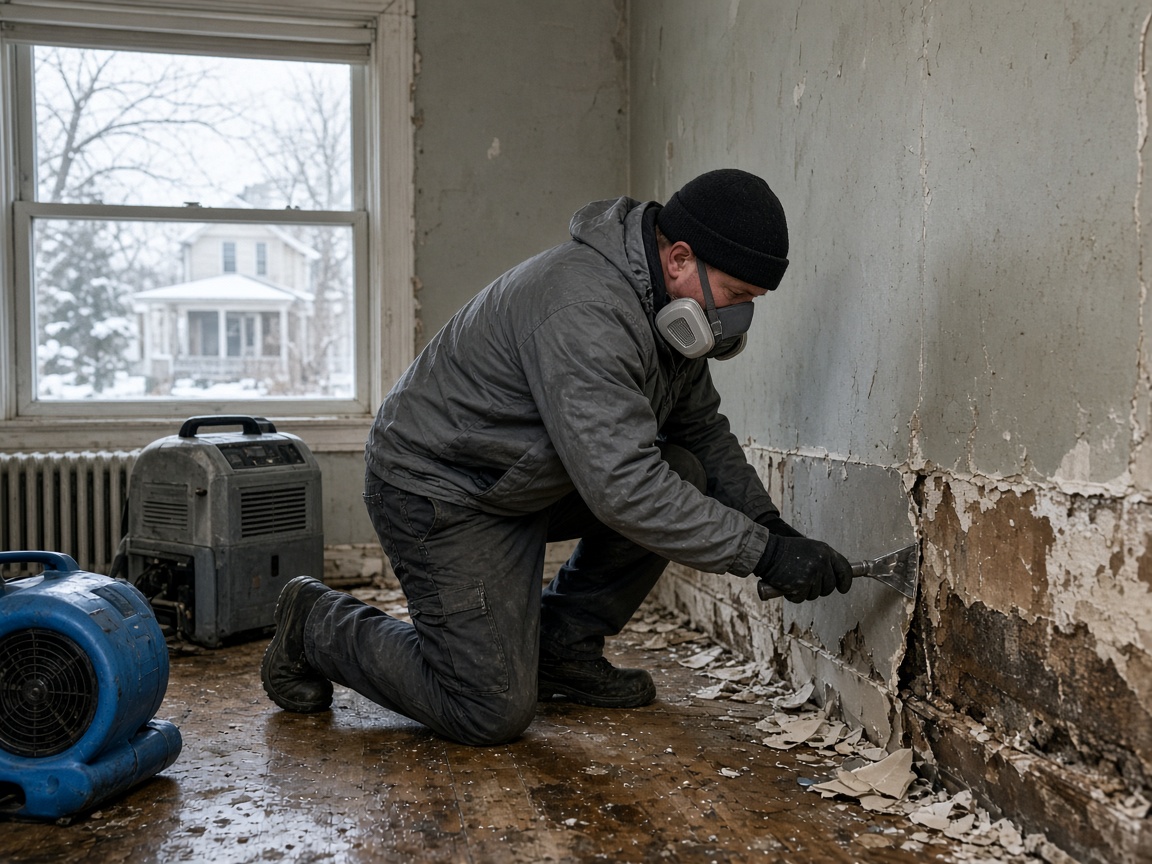
Buffalo's humid continental climate and heavy lake-effect snow create repeated freeze-thaw cycles that stress older plumbing in neighborhoods like Allentown and Broadway-Fillmore. Many homes built before 1950 still have galvanized lines that corrode and burst during January thaws, sending water into plaster walls and oak floors. Restoration crews must remove baseboards and drill vent holes low on walls to pull moisture from cavities before mold sets in within 48 hours.
In South Buffalo and Kaisertown, slab-on-grade foundations sit close to the water table, so spring snowmelt often pushes water up through cracks rather than through obvious wall leaks. Technicians use moisture meters on concrete and pull carpet pads early because trapped water under padding feeds hidden growth. Erie County building codes require permits when structural wood is replaced, so crews document every affected joist before starting demolition.
University Heights and Riverside properties near the Buffalo Niagara Medical Campus frequently see sewer backups after heavy rain because combined storm and sanitary lines overflow. Repair work here includes negative-air containment to keep odors out of patient homes and careful handling of Category 3 water. Drying times stretch longer in these dense blocks because limited yard space restricts placement of large dehumidifiers.
North Buffalo and Lovejoy homes with balloon framing allow water to travel vertically between floors, so a second-floor leak can saturate first-floor ceilings without visible ceiling stains. Crews open small inspection holes at each floor line and use infrared cameras to map the full path before cutting drywall. This targeted approach keeps repair costs down compared with full-room gutting.
Technician insight
In Buffalo the thing that catches most people out with water damage repair is how lake-effect snowmelt finds the old clay sewer laterals under South Buffalo and Kaisertown slabs; once water backs up it travels under the finished floor and you have to pull the entire pad or the smell never leaves.
Elmwood Village Pipe Burst
A second-floor galvanized line froze during a January cold snap and burst behind the plaster. Water traveled down the balloon-frame wall into the first-floor parlor. Crews opened limited inspection holes at each floor line, extracted water, and ran drying equipment for four days until readings stabilized, allowing the owner to keep the original oak floors.
Water Damage Repair Services We Offer
✓Basement Water Extraction
Removes standing water from South Buffalo and Kaisertown basements after lake-effect storms using submersible pumps and moisture tracking.
✓Pipe Burst Dry-Out
Dries wall cavities and floors in Allentown and Elmwood Village homes after galvanized pipe failures common in winter freeze-thaw cycles.
✓Sewage Backup Cleanup
Handles Category 3 water from combined sewer overflows in Riverside and University Heights with containment and full disinfection.
✓Attic Insulation Removal
Extracts wet cellulose and fiberglass from Lovejoy and Black Rock attics after roof leaks caused by heavy snow load.
✓Hardwood Floor Restoration
Dries and repairs oak and maple floors in Broadway-Fillmore and North Buffalo homes without full replacement when caught early.
Water Damage Repair Cost in Buffalo, NY
| Service | Typical Range | What Affects It |
|---|---|---|
| Basement extraction and drying | $800–$2,200 | Depends on depth of water and whether carpet or hardwood is present |
| Pipe burst wall and floor dry-out | $650–$1,800 | Higher in multi-story Allentown balloon-frame homes |
| Sewage backup remediation | $1,200–$3,000 | Includes containment and disposal; varies with square footage |
| Attic insulation removal and drying | $450–$1,100 | Cost rises with access difficulty in older Lovejoy homes |
Ranges are typical for Buffalo, NY and confirmed with an exact written quote before any work starts.
How it works
- 1
On-Site Assessment
Technician arrives from the Gruner Road shop, maps moisture with meters and infrared, and identifies affected neighborhoods such as Allentown or South Buffalo.
- 2
Water Removal
Pumps and extraction wands pull standing water; air movers begin circulation while crews protect remaining dry areas with plastic barriers.
- 3
Structural Drying
Dehumidifiers and directed airflow run until readings drop below 12 percent; daily logs track progress in older plaster and balloon-frame homes.
- 4
Controlled Demolition and Final Dry
Remove saturated drywall and insulation only where needed, then verify dryness before handing off to reconstruction or homeowner trades.
Pricing
Pricing varies by water category, square footage affected, and whether structural wood or flooring must be opened; upfront written estimates provided during assessment.