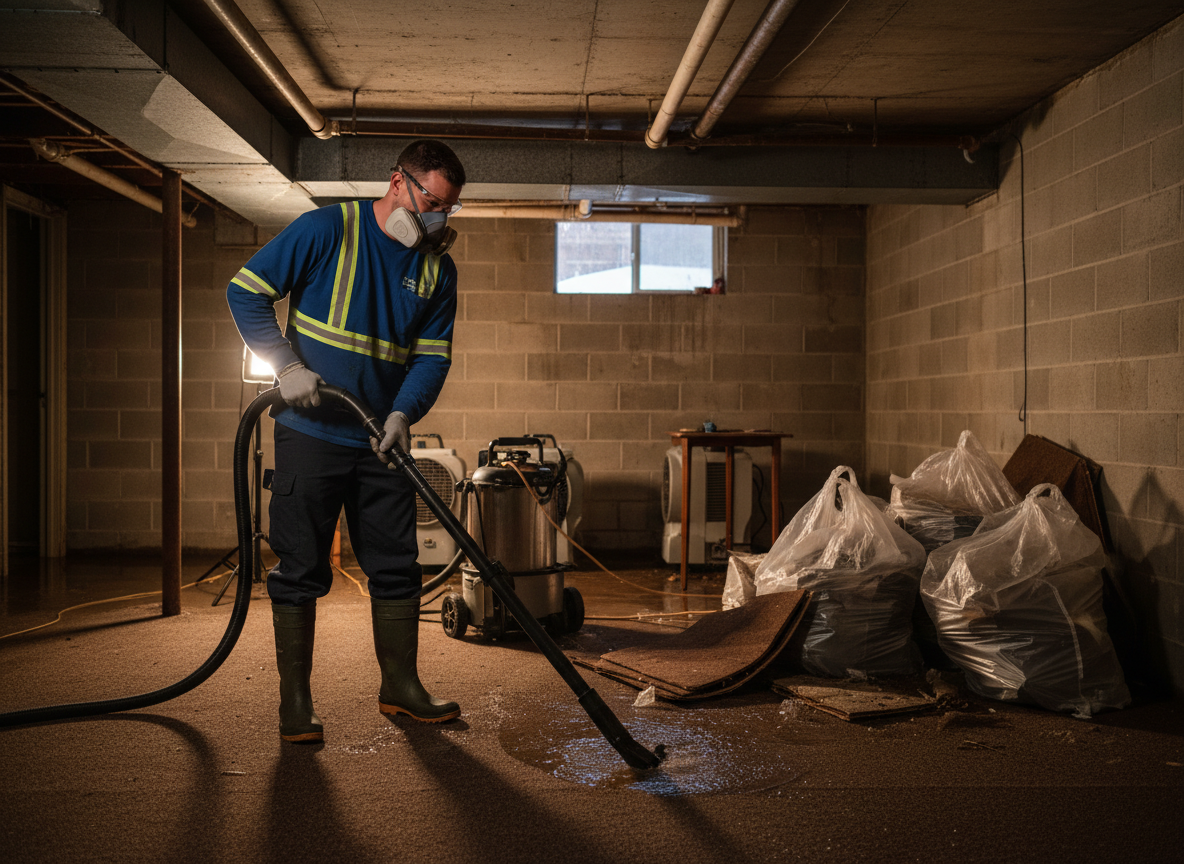
Buffalo's older housing stock in neighborhoods like Allentown, Kaisertown and Broadway-Fillmore often features plaster walls and knob-and-tube wiring that trap moisture after leaks. Water from burst pipes or roof failures travels quickly through lathe and plaster, requiring removal of baseboards and careful drying behind brick exteriors common in South Buffalo and Riverside. Lake-effect snow loads on flat roofs in North Buffalo and University Heights frequently lead to ice dam failures that soak attics and second floors.
Heavy winter snowmelt combined with Erie County's clay-heavy soils slows drainage around foundations in Lovejoy and Black Rock, pushing water into basements during spring thaws. Technicians must account for the dense urban lots near Canalside and Delaware Park where limited access points complicate equipment placement. Commercial properties near the Buffalo Niagara Medical Campus face additional challenges from shared walls and HVAC systems that spread humidity rapidly after a leak.
Restoration work in Amherst and Cheektowaga border areas often involves coordinating with older municipal storm systems that back up during intense lake-effect events. Materials like hardwood floors in Elmwood Village homes expand and cup when saturation occurs, sometimes requiring full replacement rather than simple drying. Every job starts with moisture mapping to locate hidden pockets before mold sets in, especially in the humid continental conditions that keep relative humidity high even after visible water is removed.
Technician insight
In Buffalo the thing that catches most people out with water damage restoration is how lake-effect snow creates ice dams on older roofs in places like Riverside and Kaisertown. Homeowners often stop at visible ceiling stains without realizing water has traveled down lathe and plaster into multiple rooms, and the cold temperatures slow drying so much that mold appears before spring.
South Buffalo Basement After Spring Thaw
A homeowner in South Buffalo called after snowmelt pushed water through a cracked foundation wall. Inspection showed saturation in clay soil around the 1920s home extending into the finished basement. Extraction and targeted drying prevented mold while preserving original hardwood joists. The space was returned to use within five days.
Water Damage Restoration Service Services We Offer
✓Basement Water Extraction
Removes standing water from Buffalo basements after snowmelt or pipe failures, then applies industrial drying to prevent structural rot in older foundations.
✓Ceiling and Wall Drying
Targets moisture trapped behind plaster and drywall in Allentown and Elmwood Village homes following roof leaks or ice dam failures.
✓Carpet and Flooring Restoration
Cleans and dries hardwood and carpet in South Buffalo and Kaisertown properties damaged by groundwater intrusion common in Erie County clay soils.
✓Attic Insulation Removal
Extracts water-soaked insulation from University Heights and Riverside attics after lake-effect snow causes roof leaks.
✓Emergency Board-Up Service
Secures openings in Broadway-Fillmore and Lovejoy homes after storm damage to prevent further water entry during winter weather.
✓Post-Flood Structural Drying
Uses targeted dehumidification and air movers on commercial spaces near the Buffalo Niagara Medical Campus following municipal system backups.
Water Damage Restoration Service Cost in Buffalo, NY
| Service | Typical Range | What Affects It |
|---|---|---|
| Basement Extraction | $800–$2,200 | Varies with water depth and square footage in older Erie County homes |
| Attic Drying After Ice Dam | $1,200–$3,500 | Higher in multi-story homes near Delaware Park with extensive insulation removal |
| Wall And Ceiling Restoration | $600–$1,800 | Depends on plaster versus drywall and access in dense Allentown lots |
| Flooring Drying And Repair | $500–$2,000 | Hardwood cupping in Elmwood Village often increases scope |
Ranges are typical for Buffalo, NY and confirmed with an exact written quote before any work starts.
How it works
- 1
Initial Assessment
Technicians inspect the property, map moisture levels with meters, and identify affected materials in neighborhoods such as Black Rock or North Buffalo.
- 2
Water Removal
Pumps and extractors remove standing water, followed by removal of saturated drywall or carpet to prevent hidden mold growth.
- 3
Drying And Dehumidification
Industrial equipment dries remaining structures while monitoring humidity, accounting for Buffalo's cold winter temperatures that slow natural evaporation.
- 4
Final Inspection And Restoration
Reinstalls or repairs affected surfaces and confirms moisture levels meet standards before returning the home to normal use.
Pricing
Upfront quotes provided after on-site inspection; final cost depends on extent of saturation and materials affected.